One Mile Runner Blog
http://blog.onemilerunner.com
One Mile Runner Blog

Cool Down?

A new study published in The Journal of Human Kinetics claims that a cool down does not relieve the pain from workouts. The test compared individuals after exercise. There were three groups: Group 1 that warmed up before exercise but did not cool down,  Group 2 that did not warm up before exercise but cooled down, and Group 3 that just exercised. The study states that the group with least amount of muscle pain was Group 1 emphasizing the benefit of a warm up. Groups 2 and 3 were found to have the same degree of muscle pain emphasizing the lack of importance of the cool down. Please check out the article by Gretchen Reynolds from the NY TImes: http://well.blogs.nytimes.com/2013/04/24/do-we-have-to-cool-down-after-exercise/

At www.OneMileRunner.com, I have gone into great detail about my extensive warm up, mobility program and the difference it makes for me to avoid injury. In addition, even if a cool down does not assist in post exercise muscle pain, it is an ideal time to increase your flexibility as your muscles are filled with blood. Our 3-D flexibility program is a wonderful way to work on your range of motion. So do you take the time to cool down or not? The choice is yours. I will choose to open up my range of motion at the completion of my workouts with 3-D Stretches, hurdle walk overs, a foam roller, The Flex-N-Go, and The Stick to loosen my tight areas.

Congress Avenue Mile Cancelled

On my 50th birthday, we found out that the Congress Avenue Mile was cancelled due to Run Tex, the company that puts on the race, closing their doors and going out of business after 25 years. This was a shocker as Run Tex has been in business a long time and was a big part of the athletic community in Austin, TX. They put on races, put out water for locals running on Saturday, and even had a foundation to help the area.

I was planning on running a few of my favorite races in 2013 starting with the Congress Avenue Mile. However, after training heavily since the Super Bowl, we will replace it with an upcoming race later this year. We have been racing heavily the last ten years and this is the first time that this has happened. I am always careful about when I kick in the high speed workouts to my program. If I knew that there was a chance that this could happen, I would have waited on my three speed workouts a week until later in the year, but that is how it goes...


Turning 50

I am turning the BIG 50 on Wednesday. I received my first AARP card in the mail this past weekend - so it is now official. I remember when I was a kid and I asked how old some of my parents' friends were and they told me "50." I thought, Gosh that is old! However, now that I am on the doorstep of 50, my perspective has changed and it does not feel that "old" after all. 

My Dad died of colon cancer at 56. He was an energetic guy who I thought was in decent shape as he could still perform his signature drive to the basket in defensive traffic, get fouled, and collect his three point play at 50, but life took him very quickly after that. How will things change for me at 50? I am not sure, but I can promise you to live my life to the fullest concentrating on the quality of my existence. It has been 20 years since my Dad's passing and I still thank him for his influence on my life. Turning 50 this week does make me think of him a bit more...

We here at www.OneMileRunner.com have decided to choose a few of my favorite races to compete in this year. It will all begin next month in Austin, TX. To prepare for the event, I topped off another 30 mile week of running with 5 half-mile quick repeats on the road. Next Saturday, feel free to join us in Sarasota for a one-mile time trial, point-to-point, for a "dress rehearsal" to see what we need to sharpen up in our last month of training.

Congress Avenue Mile


                                                                                   (Photo by Wayne L. Johnson - waynepacer.smugmug.com)

As I turn 50 years old in less than one month on April 10th, it is time to announce my first race for 2013 - The Congress Avenue Mile in Austin, Texas on May 18th: www.congressavenuemile.com. It was the second race in my 20/20/20<5@45 event back in 2008. I won the Masters Heat (over 40) in 4:50 at 45 years old. I have begun training now to try to beat my time of five years ago. Racing the mile faster five years later at 50 would be a great way to kick off the racing season. In 2013, I will be returning to some of my favorite races around the country. We travel to Texas first.

Our training concentrates on first establishing a running and strength base. In the photo above, we destroyed one of my 6 pound medicine balls on aggressive throw downs in the strength portion of the workout. As in the past, I put in 30 miles a week with each day being a different distance and theme to race one mile well in May.

With St. Patrick's Day upon us today, I will be toasting the holiday with my green drink specially prepared by beautiful Sekyen. The concoction is made of kale, carrot, celery, spinach, and apples - and it is pure energy! Happy St. Patty's Day to you all...

3 Ways To Be Explosive and Powerful


                                                                                        (Photo by Wayne L. Johnson  - waynepacer.smugmug.com)

While the northeast was clearing out from the record snow fall, we were finishing up our first week of training with 7 x 1/4 mile on the incline of the Ringling Bridge in 75 degree weather. In speaking to family and friends up north, they were all having fun in the snow. To each their own as I am happy to be running and training in the Sunshine state.

In my last blog post, I spoke about the importance of landing stiffly on your foot pad when sprinting to decrease your time on the ground and thus becoming faster. Many runners have a difficult time with this stiff landing and the explosive push off because they do not yet have the strength in their lower extremities to run like this for very long.

Here are 3 ways to properly develop the muscle structure in your legs to become explosive:

1) Work your way up to the Speed and Explosion segment of Body Protection, at www.BodyProtection.com.
All the explosive movements are done on your foot pad as you can only stay 1/4 of a second on the ground. Very difficult to do, but worthy of trying as you build your legs for speed, stability, and power.

2) Practice your Power Preparation before you run to prepare your legs for the power needed to run faster in your sport at http://www.youtube.com/watch?v=4WxcZtJeYAE&list=UUuZjTDO6NmSeuiWZ7jbgrxw&index=34

3) As you can see in the above photo shot yesterday at the conclusion of our workout, cool down with flexibility exercises that increase your range of motion for sprinting like the walkover/ bounding hurdles. Please note the stiff landing and how my heel does not touch the ground when I am bounding: http://www.youtube.com/watch?v=dGEaFslzNf0&list=UUuZjTDO6NmSeuiWZ7jbgrxw&index=73

Remember that I maintain my stiff landing throughout my mile competition. Months of strength, explosion, and speed training needs to be done in order for you to depend on your sprint and power form. I will be announcing my first race in 2013 in my next blog post. All the best with becoming your best!

The Secret To Running Faster

Most people discuss the two most common ways to run faster by increasing stride frequency or increasing stride length. However, I feel the key to running faster is landing stiffly on the pad of your foot. The more time that you spend on the ground, the slower you will go. It is simple - fast running is not done on the ground but in the air. If you have not worked your entire body to incorporate speed and explosion, you will not perform very well or you will get injured. 

When I am running faster, my foot lands stiffly on my foot pad (the area between the toes and the arch of your foot). This area is commonly referred to as the "ball of the foot" which has a fatty pad that protects the five metatarsal heads and provides a nice cushion when you land. When you run fast you are putting 100% of your body weight on this specific area. When I say landing "stiffly," I mean that my heel does not hit the ground. I am trying to reach out in front of my body as far as I can and still land on the foot pad; thus , decreasing my time on the ground. Landing on your heel is like putting on the brakes due to your leg being straight and spending too much time on the ground. A variety of injuries (from your foot to your back) can occur if you continue to land on your heel. Once I land on the pad of my foot, I explode forward and up with almost a bounding feeling.

The best way to find out how you land is to take your shoes off and run. See if you land on the ball of your foot, your heel, or flat. A soft flatter landing (still hits the foot pad first but allows the heel to touch) is good when running slowly and with a shorter stride length as you do not want to run with a stiff landing unless you are elongating your stride length. If you continue to land stiffly with a short stride length, this will create a sheering effect as your femur pushes down in front of the tibia creating knee pain.

Please spend time strengthening all your muscles, ligaments, and tendons (especially in your legs and feet) before trying this stiff foot pad landing. Please visit www.BodyProtection for your copy of the exercises and movements to create the strength you need to become an explosive, fast runner.

The Power of Juicing and its Affect on Performance

Whether you are an elite athlete or an amateur enthusiast, one element of your lifestyle that will undoubtedly improve your sporting performance is your diet. Nutrition and lifestyle are key elements to the way in which you can perform physically and mentally, and despite the lengths that people will go to with their training, diet is all too often forgotten about. The basics of nutrition can be found in many different online resources and it’s important to gain a good understanding of what your body requires to perform at its optimum level and then implement this into your diet. If you are looking for an extra boost to your diet that will dramatically improve peak performance and give your body a ‘hit’ of goodness, juicing could be the answer.

What is Juicing?

Juicing is essentially the process of extracting the juice of fruits and vegetables and drinking them. Some nutritionists advocate juice fasting for periods of time for anyone interested in cleansing their bodies or losing weight, and this has been proven successful time and again. Athletes however, use juicing in order to boost their nutrient levels and give their bodies a timely injection of energy before, during, and after sporting activity. Almost all of the nutrients and goodness from the fruit and vegetables remain in the juice but the fiber is taken out, leaving a highly concentrated juice drink.

When you drink a fresh fruit or vegetable juice (which does not contain the fiber) the body is able to transport the vitamins and minerals around the body extremely efficiently. This provides you with a ‘quick fix’ of healthy, vibrant, natural energy. Because the fiber has been extracted from the juice, the digestive system does not have to remove it, meaning less work for the same nutritional goodness. The digestive system uses up to 60% of the body’s energy when it is working hard to digest a big meal, and this is why you often feel lethargic after consuming a large feast. Juicing is a quick and effortless way for you to get an influx of nutrients into the body.

How Can Athletes Utilize Juicing?

Juicing can be used to great effect by athletes who are looking to maximize the body’s potential as it allows you to load the body up with nutrients without using up valuable energy during digestion. You can also consume much more equivalent fruit and vegetables as it is condensed into a refreshing drink. Used as part of a well planned training and nutrition regime, juicing really can provide you with an additional boost just when your body needs it.

Freshly squeezed juices contain huge amounts of electrolytes, which help to rehydrate the body, and getting it from natural juices is the healthiest way. If you are really looking to give the body a boost of nutrients, you can also add in some natural hemp protein powder, spirulina, or wheatgrass powder to help the body to fight fatigue in the aftermath of heavy exercise. Research shows that the optimum time for the body to take in natural proteins in around 30 minutes after exercise, so having a juice drink 30 mins after exercise will be a great way to replenish lost nutrients.

For greatest effect, juices should be consumed on an empty stomach as this is the quickest way for your body to extract the goodness from the liquid. This means that on a race day you can utilize the body boosting power of juicing by consuming a nutrient dense juice one hour before the event, another during the race (if possible) and then another 30 mins after completion, with added natural protein powder if desired. This regime can also be followed on training days.

How to Get Started

There are countless different recipe ideas and combinations out there, with some being particularly good for short term energy boosts, and others for prolonged energy usage. The trick is to try as many different juices as you like and see what works best for your body. Beetroot, cantaloupe, pineapple, kale, spinach, celery, apple, orange, pear, lemon, and watermelon are all great items for athletes to juice as they provide tons of energy for the body. A ‘green juice’ may take a little bit of time to get used to as the flavors are particularly strong, however your body will reward you for sticking with it. You can always start with more fruit based juices and slowly add in your vegetables if you prefer.

Juicing is the perfect way to stock up on nutrients and energy without placing extra demands on the body due to heavy digestion, so if you want to feel light and energetic before and during exercise, give it a go.

By Lily Hardcastle

A Simple Way To Run Faster

So many runners just go out and jog through their distance training for the week. They like the camaraderie of their fellow runners as they speak about their lives, races, and nagging injuries. They jog long and slow many times during the week and when they have more time on the weekend, they go a little longer. Then after so many miles of running, they wonder why they are not getting any faster in their races.

These runners have trained their slow twitch muscle fibers and their aerobic base all week, but they have not developed their fast twitch muscle fibers and their anaerobic base. If you are one of those runners who love to run, hate to go to your local track, and want to get faster, here is a simple way to get faster in your running workouts.

Instead of just jogging with your friends, take 20-30 minutes in the middle of your next run and increase your pace and effort. A fun and easy way to do this is to take turns choosing different objects to open up your stride to for a short burst. For example, one person might say "to the telephone pole" which is 100 yards away. After you all pick up your pace to the telephone pole, then slow back down to your normal jog for some time to recover your breathing. Then the next person might say "to the stop sign" which is 50 yards away. After you all pick up your pace to the stop sign, then again slow back down to your jogging pace to recover. By changing the short distances and the recovery times in between targets, you begin to work your body in a way that will help you get faster. You will begin to feel muscles higher up your legs that not have been incorporated before in your running style and you will feel your lungs expand even further with your deeper breathing.

You might find out that the chatter begins to wane as the intervals increase, but I hope you find the change in your run not only beneficial to your race times, but also a lot of fun as you begin to open up your stride with your friends.

Body Protection Training DVD Video Trailer

Learn how competitive athletes are training to prevent injury. This 1-minute video trailer will provide you with a quick glimpse of the content contained within the 2-Disc Body Protection Training DVD that was filmed at The Movenpick Resort and Spa at the Dead Sea in Jordan. The DVD is now available for purchase on www.bodyprotection.com.

Body Protection™ is a movement-based training program designed to prevent injury and optimize athletic performance in any sport at any age. The components of the program provide competitive athletes with strength/endurance, speed/explosion and flexibility, while developing the body’s connective tissue. This multi-muscle, multi-directional, and multi-functional series of exercises also stimulates an athlete’s proprioception which promotes better balance and stabilization.

The Body Protection Training program is available on DVD. This two (2) DVD set is packed with over 90 minutes of instruction and 60 minutes of example exercises. These exercises are the basis of the personal training that David O'Meara teaches his high-performance clients during their in-person sessions.

Competition - Nothing Like It

I attended our high school regional cross country championships and a pro tennis tournament yesterday. I wanted to observe two of my athletes compete. One at the cross country meet before I begin his speed preparations for track season and a tennis player before I prepare his 2013 schedule. I learned a great deal by seeing the race and the match in person. With all the statistics and other various numbers that computer programs spit out, for me there is no comparison to actually being at the event. I know it might sound like "old school" to some, but I need to use my senses to watch live action, hear the sounds, and feel the intensity of competition. It is what has kept me in love with live sports since I was a youth and developed my instincts as a coach.

It was indeed a day of contrasts. The runner ran a personal best falling over after crossing the finish line in pure exhaustion. The tennis player competed well for a set and then drifted away losing the last 12 of 13 games. I find it interesting why some athletes rise to the occasion and others collapse. Certainly some have not worked or prepared properly, some do not care as much, and some fear competitive situations. Why can't we try our best in the competition, win or lose with grace and humility, and take responsibility for our actions? It seems so simple, so wonderful, so free. We have been cluttered with so many other thoughts that the joy of competing against others has been tarnished. I am not naive to the fact that there are many things associated to sports success: money, scholarships, and fame. But when I put my toe on the starting line of a race, the only thing that matters to me is the desire to give my best. I just wish the young athletes of today do not miss out on how much enjoyment and satisfaction can come from true competition. My athletes had contrasting realizations yesterday that only competition could bring out. The journey continues...

The Mind of an Athlete (Part 2)

The best athletes have inner confidence and the ability to see situations in a way that help them reach their highest level of performances. Confidence is not a fragile state that can be lost at any given moment, even though many people use the phrase, "I just lost my confidence." People might lose their focus, temporarily feel poorly, or feel nervous, but confidence is built on a series of past experiences and takes time to develop and time to lose. Inner confidence is not lost on one weak performance or one missed play. For example, if a man was to ride a horse for the first time, he would not feel "confident" because past experiences were not established. However, after riding a horse for a few months, that same man would begin to feel more relaxed, more secure, and more confident. This is why it takes years to become a professional athlete. After years of practices and competitions, inner confidence is created.

How an athlete sees a situation is based on that athlete's perceptions. Perceptions are how athletes see themselves, events, and others. Perceptions are the source of their every thought, feeling, and action. It is the basis of making a lasting change in the mind. An example from my second book, Play Better, Live Better, presents a deer in the woods and standing next to me is a hunter, a farmer, and a little girl. The hunter sees the deer as a trophy and would like to kill the deer and put its head on his wall. The farmer sees the deer as a nuisance and is fearful that the deer will come and eat all his new plants and vegetables. The little girl sees the deer as a cute animal and wants to give it a hug. This is the power of perceptions - it is the same deer, but with three very different perceptions that will shape each of their thoughts, feelings and actions. The cool thing is that perceptions are a choice and an opportunity for athletes to choose perceptions that will help them perform at their highest levels.

The Mind of an Athlete (Part 1)

If you can do the physical, the most difficult part of the game to master is the mental. This is what many athletes miss in their preparation for competitions. I was asked by a reporter the other day about the greatest challenge on The 2012 Isles Mile Challenge and I said "constantly taming my mind on tour." I feel our minds love to jump around hurting our concentration and focus. Being present focused seems so simple, but yet is so elusive. Our minds jump from the past to the future keeping us mentally weak and hurting our athletic performances. 

So how do we begin to tame the mind?
1) Stay in the here and now. This race, this point, or this play is all that matters. Every other thought will diminish your performance. Easy to say, extremely difficult to do, but it is something you can learn.
2) The mind-body connection is bridged by your breathing. People laugh at me when they hear me breathe during a mile race (heavily through the mouth and nose), but they also laugh when they hear me perform my breathing exercises for relaxation, focus, and visualization (almost Darth Vader like). Deep breaths through the nose activates the lower part of your lungs and will increase blood flow and increase energy. Longer exhalations than inhalations can also help you relax and calm your entire body.
3) Create habits that keep you in the present. For example, get used to giving your absolute best mental effort in every competition (something you can control) and forget about the outcome (something you cannot control) - it is an amazing zone of performance that you will want to repeat again and again. You will be free to compete at your highest mental level.

Recovery Workouts

Since my return to Florida, I am trying to listen to my wife and rest a bit more. I have to admit that I have had difficulty "decompressing" after every one of my tours and this year is no different. A little down time, an occasional nap, and a swim in the salt water are very much in order for September. Also on my return, I try to help out a few of my running buddies in their workouts.

We try to take advantage of our natural surroundings in Florida and workout/run on the beautiful flat beaches in Sarasota. I was assisting one of my running buddies in a six mile run on Saturday and we ran by four manatees in the shallow waters of Siesta Key. Manatees are as big as cows and are very friendly. It was one of the many blessings in our early morning workout.

Even though I am not training for competition this fall, I hope to enjoy the simple pleasure of running and to inspire the other runners preparing for competition. Maybe this fall I will do a little better getting accustomed to life not on tour...

How To Achieve Peak Performance

We wanted to share what we learned in this 2012 Isles Mile Challenge experiment  that could help you perform at your peak. Remember this is a "buffet" of ideas, please pick or choose what you want that could help you reach your highest level of performance.

1) TRAINING - Our focus in the spring on running up and down the Ringling Bridge to prepare my body for the up and down conditions of the islands worked out great. My training buddy, Wayne, and I set up sprint work, tempo work, and interval work on uneven terrains. We live in Sarasota and train most of the time on surfaces that are very flat, we call the conditions "Florida Flat" (as I have raced in California on so-called flat courses, but they are very up and down compared to Florida).

2) RECOVERY - After 30,000 miles of travel through various time zones, my body held up surprising well. With races every week, one pulled hamstring and the tour was over. No Advil or ice was used  to recover - just massage therapy and my Body Protection program. During an interview the other day, the reporter did not believe me at first when I said that I used no medicine at all on the trip, but after he heard of my training - he understood. Not only on this tour did I not get injured, but I also did not get sick. My immune sysytem stayed strong throughout the travel. I took my Vega One shake every mornng, followed a strict vegan diet, and had no alcohol. 

3) RACING - Prayer, visualization, and a present focusmentality prepared me for the various race conditions. Each race was different, but my mind was the same. There were times I spent hours on the road race course going through the turns and 1/4 mile splits over and over. I wanted to feel like I had raced on this new course before. Getting familiar with the conditions really assisted me in my racing confidence. Also,my focus on my racing form and technique really helped me to stay fast and strong. Charlie Olbrias (our official timekeeper) said that I looked as fast as I did 3 years ago when he followed me to 27 races in 2009. My mile race times this year backed up his observations and assertions.

Now that the summer is over, it is time to set up your fall training, recovery, and race schedule. Please feel free to ask me any questions on how to optimize your efforts as you try to peak in the last quarter of 2012.

www.BodyProtection.com is now LIVE!

It has been a whirlwind of travel since my last race on the Big Island of Hawaii. We flew to Phoenix to view the final cut of our new Body Protection DVD, traveled to Atlanta for an interview, then to Sarasota to see a couple of clients. After traveling about 30,000 miles on The Isles Mile Challenge, I am writing you now from Istanbul, Turkey as we came here for a celebratory trip and to see a city that we have not visited yet. It has been great to unwind a bit and stroll this old city. We will move onto to NYC for a couple of days of the US Open tennis and then be back in Sarasota for the start of September.


Last Friday, www.BodyProtection.com went LIVE and you now have the opportunity to pre-order the DVD and not pay any shipping/handling costs (if you purchase the DVD before September 15th). Please check out our new site and let us know what you think of the cool layout. And don't forget to LIKE us on www.Facebook.com/bodyprotection.com.

Running Hawaii


After days in Oahu and Maui, we finally reached The Big Island of Hawaii. This island is the home of many different climates and changing landscapes and is our favorite Hawaiian island. We stayed near the race course on the hot, arid northwest side of the island in Waikoloa. We drove just an hour more north to lookout over the Pololu Valley and the weather changed dramatically with rainy conditions at the higher elevation.


Our race course is part of the Ironman bicycle course. Surrounded by volcanic rocks on each side of the road, I raced on Route 19 just outside the Kailua-Kona airport. I had a lot of difficulty in this race breathing the dry air. I know I breathe like a locomotive train when racing the mile anyway, but this was different. You can hear me wheezing on the video throughout the race. I gutted out a 4:44 mile and successfully completed the 2012 Isles Mile Challenge finishing 7 island one-mile races, in 7 different time zones, in 7 weeks - all under 5 minutes. Thanks to our Big Island driver, "T," keeping me protected throughout the race.


This was an amazing and intense tour. Next weekend back on the mainland, I will summarize the items we experimented with in 2012, the things we learned on our travels, and where we go from here. I turn the big 50 next April. Many people have been writing in letting me know what they think I should do for a 50th feat. Please feel free to let me know your ideas and thank you all for your continued support and prayers, it is much appreciated.

Maui Jim Sunglasses

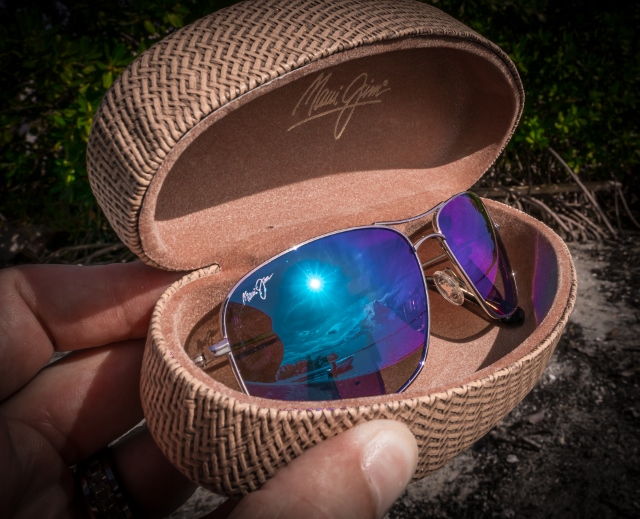
Aloha! After a couple of days on Oahu, we flew to Maui to visit one of our longtime sponsors at www.OneMileRunner.com, Maui Jim Sunglasses www.mauijim.com. It was our first time visiting the location where Maui Jim began in Lahaina. Even though Maui Jim moved its headquarters to Peoria, IL after purchasing RLI Vision in late 1996, the Hawaiian culture and way of life that Maui Jim promotes dates back to its roots here in Lahaina.

Having an opportunity to meet the owner and CEO of Maui Jim, Walter Hester, and his entire Lahaina staff was a treat for Sekyen and me. We felt the warmth, hospitality, and care that Maui Jim prides itself in everyday with its superior customer service and employee relations.


(Sekyen and I with Walter Hester)


(Bill Haywood and Jen Williams with me at the entrance of the Lahaina location)

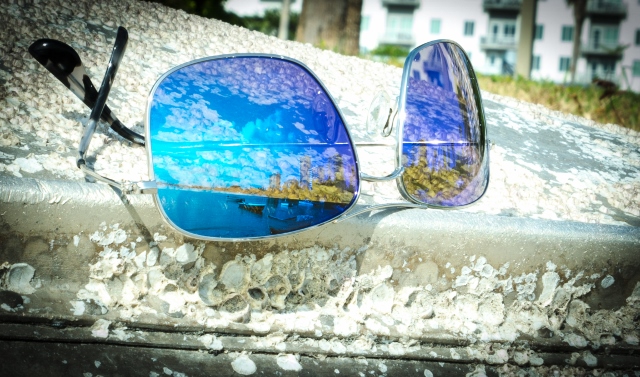
Being a Fitness Ambassador for the Maui Jim Team http://www.mauijim.com/teammaui.html called  'Ohana  (Hawaiian for family), I was asked to test out a new pair of sunglasses called "Hot Sands." Even though "Hot Sands" will not be available for purchase until later this year, you will see me testing out the model during the last leg of The 2012 Isles Mile Challenge on the Big Island this Saturday. 

Sekyen and I wanted to say a special thank you to Ruthie Belden, Executive Assistant to CEO, who took the time out of her busy schedule to show us around the facility and share with us the values of Hawaiian history. Mahalo!

Running Fidalgo Island


I had no idea where Fidalgo Island was located before I began The 2012 Isles Mile Challenge. However, we are pleased to learn about this wonderful getaway just about 80 miles northwest of Seattle, WA. We had a chance to see Deception Pass, a strait between Fidalgo Island and Whidbey Island, and walk/jog across the bridge built over the Pass in 1935. We stayed in Anacortes, the main town on Fidalgo Island, during its busiest weekend of the year as they hosted their annual Arts and Crafts Festival in historic Downtown Anacortes. And we enjoyed the special hospitality of Matt McKay at the Nantucket Inn.


We were blessed with great weather for the race as Fidalgo Island is in a rain shadow as mountains block the rain producing systems that keep Seattle so moist throughout the year. The weather even in Seattle this weekend was beautiful. I ran a 4:43 on a tranquil country road that typifies the area and was protected at all times by Mert and his taxi service.


We are traveling to Hawaii on Sunday for the last leg of the The Isles Mile Challenge for www.OneMileRunner.com. We are planning on racing on the Big Island next weekend after seeing the great waves of the North Shore of Oahu, touring the Maui Jim sunglass office (one of our sponsors) on Wednesday, and then racing on Saturday on the Big Island near where the IronMan triathlon takes place. It should make for a great finish to an unbelievable tour.

Running Bermuda


You would think with an island's highest point being only about 260 feet above sea level that it has flat terrain, but Bermuda is an up and down island making Race #5 on The Isles Mile Challenge my most difficult race yet. Bermuda is a British overseas territory located in the northern Atlantic Ocean off the east coast of the United States. In my opinion, it has one of the world's most beautiful beaches in Horseshoe Bay and is a leader in off-shore finance.


We raced just outside the capital city of Hamilton on a warm morning. I ran a 4:49 mile on the sometimes dangerous course, but was well protected by driver, Jack Mungal. 


After five weeks on the road, we were pleased to board a plane soon after the race to spend the weekend in Sarasota before venturing west to Seattle at the beginning of the week.

Running Mount Desert Island


Stop #4 on The Isles Mile Challenge is the largest island off the coast in Maine - Mount Desert Island. With its rugged and rocky beauty, Mount Desert Island is the home of Acadia National Park and the quaint town of Bar Harbor. We arrived on Saturday with Charlie Olbrias and Scott Boucher from The Last Mile Racing Management LLC. Charlie and Scott measured the selected course and prepared us on the particulars of the race on Sunday.


I awoke at 4am to begin my warm-up for the race. The sun rises early this far to the east, so a few minutes after 5am the sun appeared. We had dry and sunny conditions, around 65 degrees, with strong winds. It was a great day to race. The race course was in Acadia National Park and was one of our most picturesque routes to date. Check out the beautiful views in our 2 minute video below:


It was very special to have Charlie and Scott from The Last Mile Racing Management LLC (www.thelastmileracing.com). They use the My Laps system to get the precise computer time with the "chip" being attached to the back of the bib number, so when your chest crosses the final mat, the clock stops. I ran a 4:39 and was happy to have my old crew with me.


We are traveling on Tuesday to Bermuda and Race #5 will be at the end of the week. We have crossed the halfway point of our tour...

Blog Software
Blog Software